Children’s rights – what we need to know
Home > Children’s rights – what we need to know

Published on
31st January, 2024
While there is not a clear definition for human rights as a lot of people have diverging views on it, a lot more scholars seem to be moving in the same tangent when it comes to what can be said to be its definition. According to Bantekas and Oette, they find the topic of human rights rather technical, and that is “to take the meaning of human rights for granted, or simply to refer to formulas denoting rights that we have by virtue of being human, would ignore the controversy surrounding their foundations and validity”. However, some schools of thought support what the United Nations sees as human rights.
Chapter 5 of the Constitution of Ghana highlights fundamental human rights enjoyed by individuals and institutions where these rights are not to be determined by the sex, social status, or even educational background of these individuals.
Narrowing it down to Ghana, people have colloquial perception that children do not have any right at all. This perception has accounted for numerous abuses in the system. For instance, comparing Ghana to any developed country, it is credited to the child to have a right to speech but in most Ghanaian communities or settings, a child can only express this right at a certain age. In the quest of the child expressing his or her sentiment about an opinion or a public discourse, he/she may be seen or tagged as being disrespectful and this is seen as a common abuse in Ghana.
For example, a child does not have the right to ask an elderly person a question, but be required to answer a question. This has unfortunately resulted in a lot of children acting timidly even when they are supposed to act rationally in some circumstances. The Children’s Act, 1998 behooves the child to have the right to life, dignity, respect, leisure, liberty, health, education, and shelter from his parents. This piece of writing seeks to discuss the ‘rights of children in Ghana’.
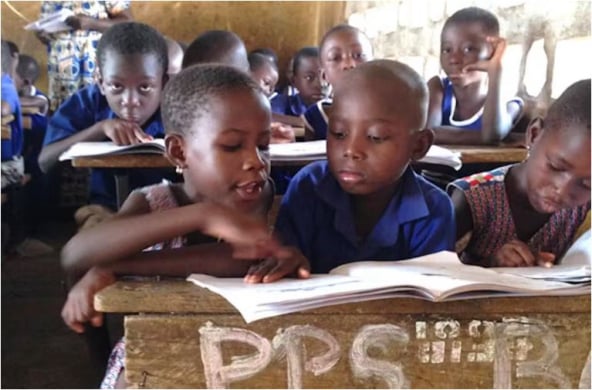
Educational rights of children, which is prioritised in most developed countries, are on the contrary not recognised in most developing countries. In Ghana, a lot of children are denied such rights. According to findings by UNICEF Ghana, the following were recounted: “Nearly 623,500 children of primary school age are still not enrolled in primary school, and one out of four children in the kindergarten age range (from four to five years of age) are not in pre-school.
Despite Ghana’s progress in improving access to education for all, there are still challenges preventing thousands of children from going to school and learning.
Those who are privileged to enjoy these rights are either denied of its full benefits and privileges such as studying under trees, educational materials in short supply, among others. On the other hand, just a few privileged children enjoy these rights to its fullest in the Ghanaian society. In recent times, the government has made efforts for children to enjoy these rights. But in reality, some are not enjoying the quality of it although the sustainable development goal 4 suggests a quality education for all.
Health forms the numerous rights children are ideally entitled to enjoy, which echoes the saying ‘a healthy child is a happy child’. Unfortunately, a lot of vulnerable children are deprived of good health in Ghana primarily because of their inability to pay for a quality healthcare – a challenge which the sustainable development goal 3 talks about.
Although the Government of Ghana, with its implementation plan, has come through to salvage the situation, a lot more needs to be done. The introduction of the National Health Insurance Scheme (NHIS), with support from several stakeholders, has made is possible for children to be attended to when sick; but recently, the scheme seems to be doing a little above nothing, causing the deaths of children in Ghana.
Rights of children also reveal the quality of life children must enjoy, which includes freedom from abuse. Abuse on children comes in various forms and media. A lot of children in Ghana unfortunately suffer abuse from either their peers, families, or even strangers. While it is important to know that abuse is not limited to the physical, it is imperative to note that abuse in children spans further to psychological, emotional, sexual and many others.
The effect of this abuse has been proven to be neglected. For instance, a report from DOVVSU reported by Ghana News.com revealed that defilement cases reduced from 1,304 in 2014 to 1,196 in 2015; and rape cases also dropped from 337 in 2014 to 316 in 2015. Which even suggests that prior to this, higher defilement cases were being recorded.
Beckoning from these facts of trepidation, there is a need for a timely resolution to ensure that the rights of children were not curtailed but protected. In view of this, a treaty was adopted by the United Nations member-states on 20th November, 1989. Ghana signed the Convention of the Rights of the Child on 29th January, 1990 and one week later, on 5th February, 1990, Ghana became the first country in the world to ratify the treaty, thus, committing to adopt it to a national law.
Credit: www.thebftonline.com